 |
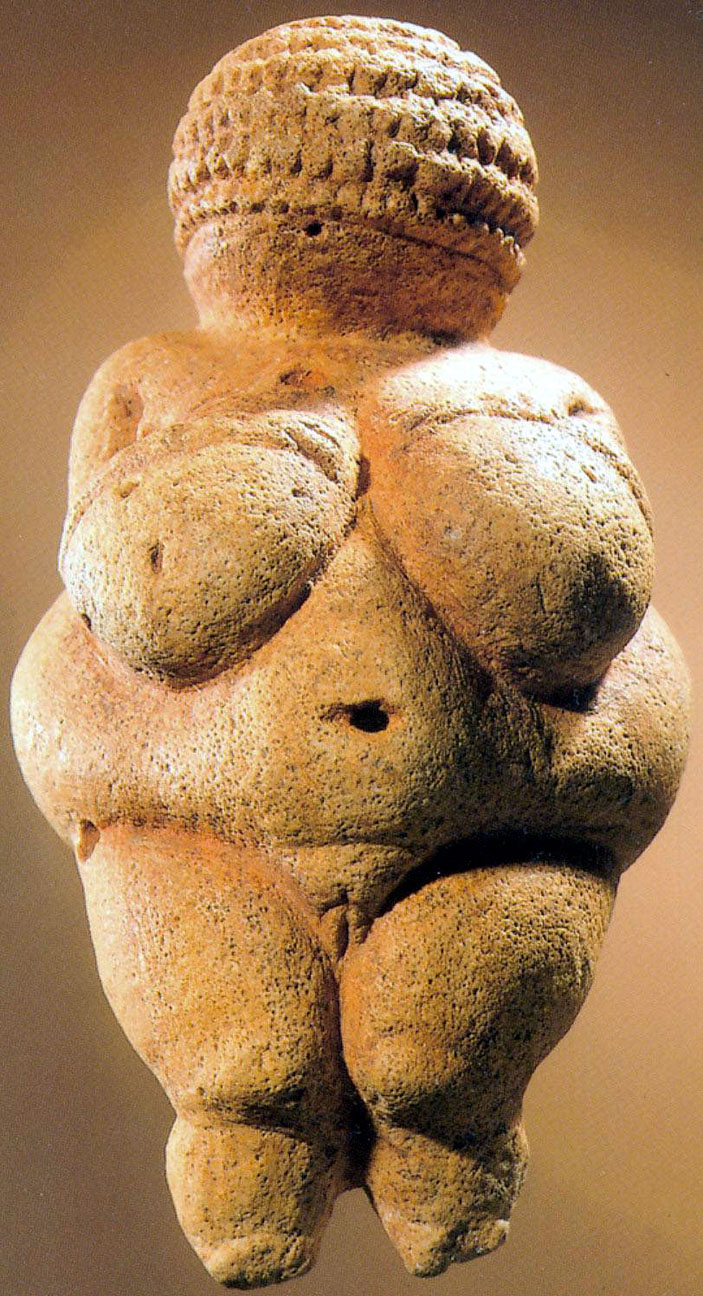
Venus of Willendorf
c. 24,000-22,000 BCE
Oolitic limestone
43/8 inches (11.1 cm) high
( |
Discovered in Austria
The name “Venus” was used in
an ‘ironic and mocking’ way. The “Venus
of Willendorf” makes no attempts to hide her breasts or pubic area, which, at
the time she was discovered would be considered immodest. In being named “Venus” she is compared to
Roman statues portraying a more lithe body structure, one which is seen as closer
to “ideal” in modern society. The statue is the opposite of the “tall, erotically curvaceous, nude young
woman whose primary identity, as every heterosexual male recognizes, resides in
her physical and sexual body.” She is
plump, perhaps short, her breasts are large and weighed down by their virility,
perhaps suggesting that she has birthed many children and also nourished their
bodies with her own.
The term “Venus” is
problematic in that it implies that this body is female. That simply by having breasts and female
genitalia, the statue shows femininity.

