 |
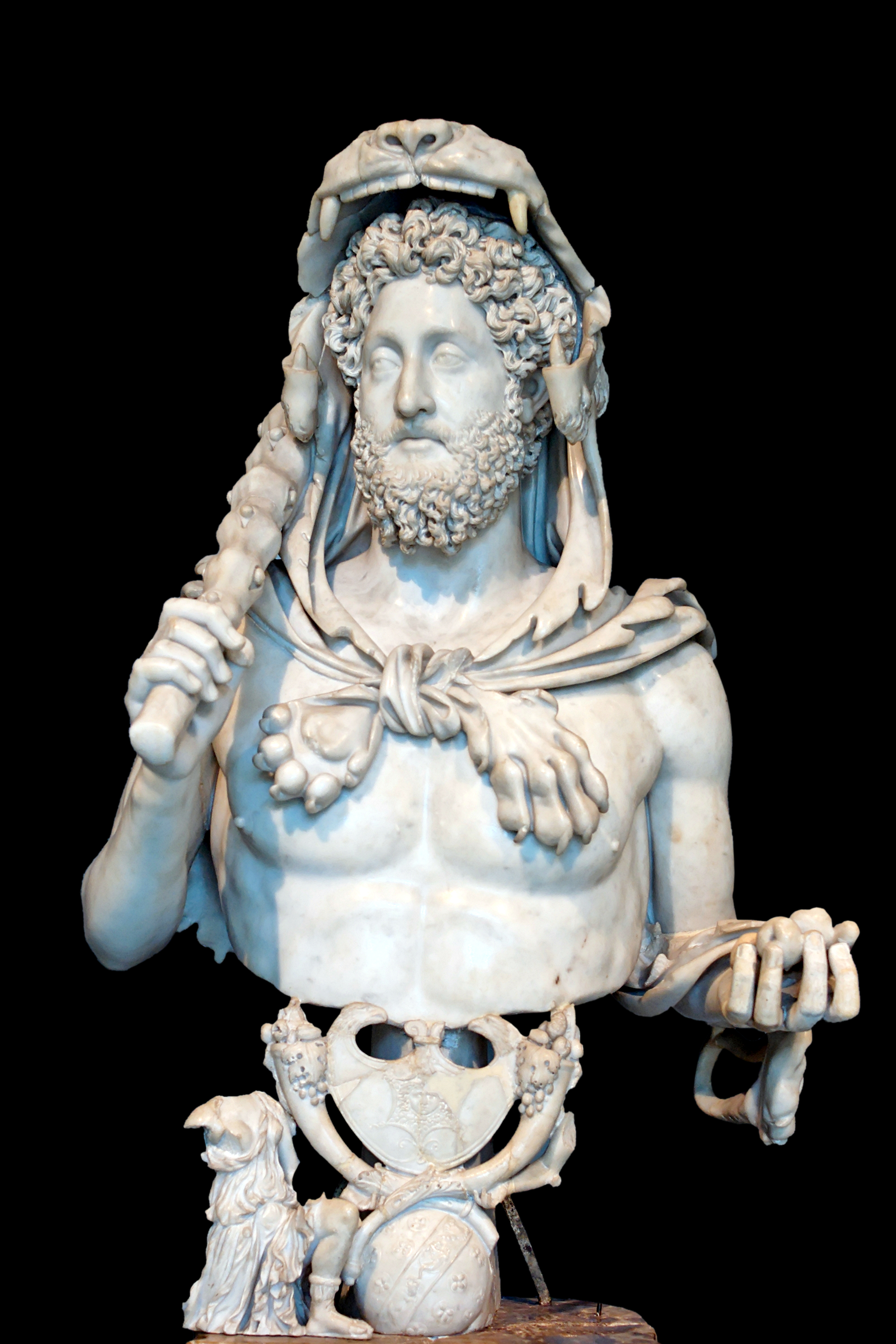
| Bust of Commodus as Hercules |
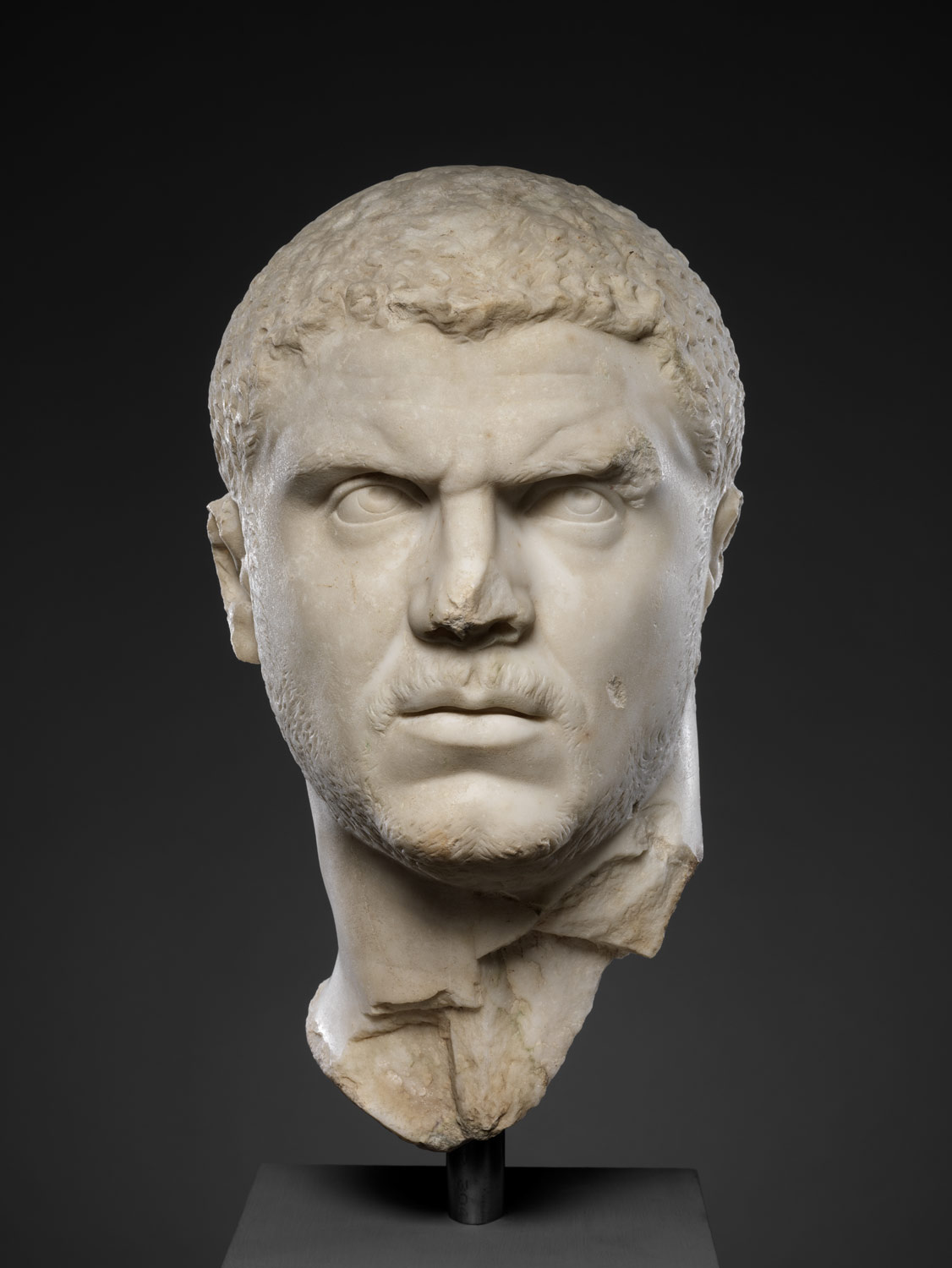 |
| Bust of Caracalla |
The Bust of Commodus as Hercules aims to show the viewer that this ruler is favored by the gods. It aims to depict Commodus as a demi-god, one who is strong, handsome and heroic. This sculptor was also interested in making Commodus look good. He is shown as muscular, wrinkle-free, attractive and bearded. He holds a club, which describes to us that he is capable and his lion hood shows the viewer that he can hunt and capture even the most ferocious beast. The pedestal he resides upon has fig leaves and grapes which are often associated with the god Bacchus, or Dionysus, the god of wine and excess. There is also a headless (probably had a head when she was carved) woman, perhaps a maenad, at the base of the bust. This bust also exudes youth and virility. This person is the epitome of youth, strength and heroism which is meant to sway the public's favor. This statue was probably displayed publicly so that the ruler was often gazed upon and remind the citizens of his strength and power.
The Bust of Caracalla shows the wrinkles in his forehead, a furrowed brow indicating thoughtfulness or perhaps is meant to show how serious this man was. This bust seems to explore verism, which is the interest in the faithful reproduction of the immediate visual and tactile appearance of subjects, or intense realism. Caracalla, by being portrayed with 'flaws', is shown as being experienced and his realistic likeness allows persons (Patricians) to show that they are related to these famous persons.


Certainly, both sculptures are fascinating and aim to accurately portray the rulers and serve as propaganda! I like both sculptures, because each have their own characteristics to consider, and both have an ideal pertaining to strength and experience as a leader. I think it's interesting to see the pedestal Commodus is above associated with the god of wine, and in turn the statue of a woman a maenad. Since he has all these references to Hercules and use that association with the gods and heroes, having the fig leaves, grapes, and maenad add onto that association and support him as a divine/strong ruler.
ReplyDeleteI think you provided accurate and thoughtful descriptions of the busts that are very relevant in relating them to politics. I had not thought about the bust of Commodus in that way, that perhaps this particular statue was designed for public display. The piece does have a ton of detail, and it is very positive in it's decoration, which could definitely persuade the viewer to regard Commodus in the same way. Adding to the fact is that many people could not read back then, so they relied heavily on imagery and visual communication to understand what was going on around them. So to create statues of the rulers with certain characteristics is a genius way to sway the the political opinions of the people, I never realized that!
ReplyDeleteI really like how you say his flaws show experience and realism. I also think it shows him bothered and irritated by his enemies. I think Commodus' way of showing his power would be good during a reign of prosperity, whereas Caracalla's facial expression would be great for a time of war. I think United States politicians like to portray themselves like Commodus' did–as heroes.
ReplyDeleteI like that you gave a description of the visual differences, however I feel you should have elaborated more on the meaning behind the busts, and who the people where.
ReplyDelete